

Polyuecteby Pierre CorneilleTranslated by Thomas ConstableINTRODUCTORY NOTEPierre Corneille was born in Rouen in 1606, the son of an official;was educated by the Jesuits, and practised unsuccessfully as a lawyer.His dramatic career began with the comedy of "Melite," but it was byhis "Medee" that he first proved his tragic genius. "The Cid" appearedin 1636, and a series of masterpieces followed"Horace," "Cinna,""Polyeucte," "Le Menteur." After a failure in "Pertharite" he retiredfrom the stage, deeply hurt by the disapproval of his audience. Six...
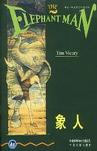
附:【本作品来自互联网,本人不做任何负责】内容版权归作者所有。Chapter 1The Creature in the ShopMy name is Dr Frederick Treves. I am a doctor at the London Hospital. One day in 1884, I saw a picture in the window of a shop near the hospital. I stopped in front of the shop and looked at the picture. At first I felt interested, then I felt angry, then afraid. It was a horrible, ugly picture. There was a man in the picture, but he did not look like you and me. He did not look like a man. He looked like an elephant.I read the writing under the picture. It said:Come in and see the Elephant Man. 2 pence. I opened the door and wen
The Flying U Ranchby B. M. BowerCONTENTSCHAPTERI. The Coming of a Native SonII. "When Greek Meets Greek"III. Bad NewsIV. Some HopesV. SheepVI. What Happened to AndyVII. Truth Crushed to Earth, etc.VIII. The Dot OutfitIX. More SheepX. The Happy Family Herd SheepXI. Weary UnburdensXII. Two of a KindXIII. The Happy Family Learn SomethingXIV. Happy JackXV. OlesonXVI. The End of the DotsXVII. Good NewsFLYING U RANCHCHAPTER I. The Coming of a Native Son...
Is Shakespeare Dead?by Mark TwainFROM MY AUTOBIOGRAPHYCHAPTER IScattered here and there through the stacks of unpublished manuscript which constitute this formidable Autobiography and Diary of mine, certain chapters will in some distant future be found which deal with "Claimants"claimants historically notorious: Satan, Claimant; the Golden Calf, Claimant; the Veiled Prophet of Khorassan, Claimant; Louis XVII., Claimant; William Shakespeare, Claimant; Arthur Orton, Claimant; Mary Baker G. Eddy, Claimantand the rest of them. Eminent Claimants, successful Claimants, defeated Claimants, royal Cl
The Writings of Abraham Lincolnby Abraham LincolnVOLUME 5.TO SYDNEY SPRING, GRAYVILLE, ILL.SPRINGFIELD, June 19, 1858.SYDNEY SPRING, Esq.MY DEAR SIR:Your letter introducing Mr. Faree was duly received.There was no opening to nominate him for Superintendent of PublicInstruction, but through him Egypt made a most valuable contributionto the convention. I think it may be fairly said that he came off thelion of the dayor rather of the night. Can you not elect him to theLegislature? It seems to me he would be hard to beat. What...
FAIRY TALES OF HANS CHRISTIAN ANDERSENTHE RACESby Hans Christian AndersenA PRIZE, or rather two prizes, a great one and a small one, hadbeen awarded for the greatest swiftness in running,- not in a singlerace, but for the whole year."I obtained the first prize," said the hare. "Justice must stillbe carried out, even when one has relations and good friends among theprize committee; but that the snail should have received the secondprize, I consider almost an insult to myself"...
Painted Windowsby Elia W. PeattieWill you come with me into the chamber of memoryand lift your eyes to the painted windows where the figuresand scenes of childhood appear? Perhaps by looking withkindly eyes at those from out my past, long wished-forvisions of your own youth will appear to heal the woundsfrom which you suffer, and to quiet your stormy andrestless heart.CONTENTSI NIGHTII SOLITUDEIII FRIENDSHIPIV FAMEV REMORSEVI TRAVELPAINTED WINDOWSINIGHTYOUNG people believe very littlethat they hear about the compen-...
Before Adamby Jack London"These are our ancestors, and their history is ourhistory. Remember that as surely as we one day swungdown out of the trees and walked upright, just assurely, on a far earlier day, did we crawl up out ofthe sea and achieve our first adventure on land."CHAPTER IPictures! Pictures! Pictures! Often, before I learned,did I wonder whence came the multitudes of picturesthat thronged my dreams; for they were pictures thelike of which I had never seen in real wake-a-day life.They tormented my childhood, making of my dreams a...
THE SON OF TARZANby Edgar Rice BurroughsTO HULBERT BURROUGHSChapter 1The long boat of the Marjorie W. was floating down the broad Ugambi with ebb tide and current. Her crew were lazily enjoying this respite from the arduous labor of rowing up stream. Three miles below them lay the Marjorie W. herself, quite ready to sail so soon as they should have clambered aboard and swung the long boat to its davits. Presently the attention of every man was drawn from his dreaming or his gossiping to the northern bank of the river. There, screaming at them in a cracked falsetto and with skinny arms out
A Second Homeby Honore de BalzacTranslated by Clara BellDEDICATIONTo Madame la Comtesse Louise de Turheim as a token of remembrance and affectionate respect.A SECOND HOMEThe Rue du Tourniquet-Saint-Jean, formerly one of the darkest and most tortuous of the streets about the Hotel de Ville, zigzagged round the little gardens of the Paris Prefecture, and ended at the Rue Martroi, exactly at the angle of an old wall now pulled down. Here stood the turnstile to which the street owed its name; it was not removed till 1823, when the Municipality built a ballroom on the garden plot adjoining the Hot
FAIRY TALES OF HANS CHRISTIAN ANDERSENTHE TINDER-BOXby Hans Christian AndersenA SOLDIER came marching along the high road: "Left, right- left,right." He had his knapsack on his back, and a sword at his side; hehad been to the wars, and was now returning home.As he walked on, he met a very frightful-looking old witch inthe road. Her under-lip hung quite down on her breast, and she stoppedand said, "Good evening, soldier; you have a very fine sword, and alarge knapsack, and you are a real soldier; so you shall have as...
Studies of Lowellby William Dean HowellsI have already spoken of my earliest meetings with Lowell at Cambridgewhen I came to New England on a literary pilgrimage from the West in1860. I saw him more and more after I went to live in Cambridge in 1866;and I now wish to record what I knew of him during the years that passedbetween this date and that of his death. If the portrait I shall try topaint does not seem a faithful likeness to others who knew him, I shallonly claim that so he looked to me, at this moment and at that. If I donot keep myself quite out of the picture, what painter ever d
On Our Selectionby Steele Rudd (Arthur Hoey Davis)PIONEERS OF AUSTRALIA!To You "Who Gave Our Country Birth;"to the memory of Youwhose names, whose giant enterprise, whose deeds offortitude and daringwere never engraved on tablet or tombstone;to You who strove through the silences of the Bush-landsand made them ours;to You who delved and toiled in loneliness throughthe years that have faded away;to You who have no place in the history of our Countryso far as it is yet written;to You who have done MOST for this Land;to You for whom few, in the march of settlement, in the turmoil...
PART VIKRONBORGIIt is a glorious winter day. Denver, standing on herhigh plateau under a thrilling green-blue sky, is maskedin snow and glittering with sunlight. The Capitol buildingis actually in armor, and throws off the shafts of the sununtil the beholder is dazzled and the outlines of the buildingare lost in a blaze of reflected light. The stone terrace is awhite field over which fiery reflections dance, and the trees...
50 Bab Balladsby W. S. GilbertPREFACE.THE "BAB BALLADS" appeared originally in the columns of "FUN,"when that periodical was under the editorship of the late TOM HOOD.They were subsequently republished in two volumes, one called "THEBAB BALLADS," the other "MORE BAB BALLADS." The period duringwhich they were written extended over some three or four years;many, however, were composed hastily, and under the discomfortingnecessity of having to turn out a quantity of lively verse by acertain day in every week. As it seemed to me (and to others) that...
Idle Ideas in 1905by Jerome K. JeromeContents:Are We As Interesting As We Think We Are?Should Women Be Beautiful?When Is The Best Time To Be Merry?Do We Lie A-Bed Too Late?Should Married Men Play Golf?Are Early Marriages A Mistake?Do Writers Write Too Much?Should Soldiers Be Polite?Ought Stories To Be True?Creatures That One Day Shall Be MenHow To Be Happy Though LittleShould We Say What We Think, Or Think What We Say?Is The American Husband Made Entirely Of Stained GlassDoes The Young Man Know Everything Worth Knowing?How Many Charms Hath Music, Would You Say?...