

Messer Marco Polo by Brian Oswald Donn-ByrneA NOTE ON THE AUTHOR OF MESSER MARCO POLOSo Celtic in feeling and atmosphere are the stories of Donn Byrne that many of his devotees have come to believe that he never lived anywhere but in Ireland. Actually, Donn Byrne was born in New York City. Shortly after his birth, however, his parents took him back to the land of his forefathers. There he was educated and came to know the people of whom he wrote so magically. At Dublin University his love for the Irish language and for a good fight won him many prizes, first as a writer in Gaelic and seco
The Black Dwarfby Walter ScottCONTENTS.I. Tales of my Landlord- Introduction by "Jedediah Cleishbotham"II. Introduction to THE BLACK DWARFIII. Main text of THE BLACK DWARFI. TALES OF MY LANDLORDCOLLECTED AND REPORTED BY JEDEDIAH CLEISHBOTHAM,SCHOOLMASTER AND PARISH-CLERK OF GANDERCLEUGH.INTRODUCTION.As I may, without vanity, presume that the name and official description prefixed to this Proem will secure it, from the sedate and reflecting part of mankind, to whom only I would be understood to address myself, such attention as is due to the sedulous instructor of youth, and the careful
The Coming Raceby Edward Bulwer LyttonChapter I.I am a native of _____, in the United States of America. My ancestors migrated from England in the reign of Charles II.; and my grandfather was not undistinguished in the War of Independence. My family, therefore, enjoyed a somewhat high social position in right of birth; and being also opulent, they were considered disqualified for the public service. My father once ran for Congress, but was signally defeated by his tailor. After that event he interfered little in politics, and lived much in his library. I was the eldest of three sons, and
The Garden PartyThe Garden PartyBy Katherine Mansfield1- Page 2-The Garden Party1. AT THE BAY.Chapter 1.I.Very early morning. The sun was not yet risen, and the whole ofCrescent Bay was hidden under a white sea-mist. The big bush-coveredhills at the back were smothered. You could not see where they ended...
The Man Who Could Not Loseby Richard Harding DavisThe Carters had married in haste and refused to repent at leisure.So blindly were they in love, that they considered their marriagetheir greatest asset. The rest of the world, as represented bymutual friends, considered it the only thing that could be urgedagainst either of them. While single, each had been popular. As abachelor, young "Champ" Carter had filled his modest placeacceptably. Hostesses sought him for dinners and week-end parties,men of his own years, for golf and tennis, and young girls likedhim because when he talked to one of th
Polyuecteby Pierre CorneilleTranslated by Thomas ConstableINTRODUCTORY NOTEPierre Corneille was born in Rouen in 1606, the son of an official;was educated by the Jesuits, and practised unsuccessfully as a lawyer.His dramatic career began with the comedy of "Melite," but it was byhis "Medee" that he first proved his tragic genius. "The Cid" appearedin 1636, and a series of masterpieces followed"Horace," "Cinna,""Polyeucte," "Le Menteur." After a failure in "Pertharite" he retiredfrom the stage, deeply hurt by the disapproval of his audience. Six...
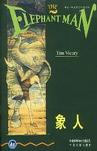
附:【本作品来自互联网,本人不做任何负责】内容版权归作者所有。Chapter 1The Creature in the ShopMy name is Dr Frederick Treves. I am a doctor at the London Hospital. One day in 1884, I saw a picture in the window of a shop near the hospital. I stopped in front of the shop and looked at the picture. At first I felt interested, then I felt angry, then afraid. It was a horrible, ugly picture. There was a man in the picture, but he did not look like you and me. He did not look like a man. He looked like an elephant.I read the writing under the picture. It said:Come in and see the Elephant Man. 2 pence. I opened the door and wen
The Writings of Abraham Lincolnby Abraham LincolnVOLUME 5.TO SYDNEY SPRING, GRAYVILLE, ILL.SPRINGFIELD, June 19, 1858.SYDNEY SPRING, Esq.MY DEAR SIR:Your letter introducing Mr. Faree was duly received.There was no opening to nominate him for Superintendent of PublicInstruction, but through him Egypt made a most valuable contributionto the convention. I think it may be fairly said that he came off thelion of the dayor rather of the night. Can you not elect him to theLegislature? It seems to me he would be hard to beat. What...
FAIRY TALES OF HANS CHRISTIAN ANDERSENTHE RACESby Hans Christian AndersenA PRIZE, or rather two prizes, a great one and a small one, hadbeen awarded for the greatest swiftness in running,- not in a singlerace, but for the whole year."I obtained the first prize," said the hare. "Justice must stillbe carried out, even when one has relations and good friends among theprize committee; but that the snail should have received the secondprize, I consider almost an insult to myself"...
THE SON OF TARZANby Edgar Rice BurroughsTO HULBERT BURROUGHSChapter 1The long boat of the Marjorie W. was floating down the broad Ugambi with ebb tide and current. Her crew were lazily enjoying this respite from the arduous labor of rowing up stream. Three miles below them lay the Marjorie W. herself, quite ready to sail so soon as they should have clambered aboard and swung the long boat to its davits. Presently the attention of every man was drawn from his dreaming or his gossiping to the northern bank of the river. There, screaming at them in a cracked falsetto and with skinny arms out
Studies of Lowellby William Dean HowellsI have already spoken of my earliest meetings with Lowell at Cambridgewhen I came to New England on a literary pilgrimage from the West in1860. I saw him more and more after I went to live in Cambridge in 1866;and I now wish to record what I knew of him during the years that passedbetween this date and that of his death. If the portrait I shall try topaint does not seem a faithful likeness to others who knew him, I shallonly claim that so he looked to me, at this moment and at that. If I donot keep myself quite out of the picture, what painter ever d
On Our Selectionby Steele Rudd (Arthur Hoey Davis)PIONEERS OF AUSTRALIA!To You "Who Gave Our Country Birth;"to the memory of Youwhose names, whose giant enterprise, whose deeds offortitude and daringwere never engraved on tablet or tombstone;to You who strove through the silences of the Bush-landsand made them ours;to You who delved and toiled in loneliness throughthe years that have faded away;to You who have no place in the history of our Countryso far as it is yet written;to You who have done MOST for this Land;to You for whom few, in the march of settlement, in the turmoil...
The Essays of Montaigne, V3by Michel de MontaigneTranslated by Charles CottonEdited by William Carew Hazilitt1877CONTENTS OF VOLUME 3.XIII. The ceremony of the interview of princes.XIV. That men are justly punished for being obstinate in the defenceof a fort that is not in reason to be defendedXV. Of the punishment of cowardice.XVI. A proceeding of some ambassadors.XVII. Of fear.XVIII. That men are not to judge of our happiness till after death.XIX. That to study philosophy is to learn to die....
PART VIKRONBORGIIt is a glorious winter day. Denver, standing on herhigh plateau under a thrilling green-blue sky, is maskedin snow and glittering with sunlight. The Capitol buildingis actually in armor, and throws off the shafts of the sununtil the beholder is dazzled and the outlines of the buildingare lost in a blaze of reflected light. The stone terrace is awhite field over which fiery reflections dance, and the trees...
The Essays of Montaigne, V6by Michel de MontaigneTranslated by Charles CottonEdited by William Carew Hazilitt1877CONTENTS OF VOLUME 6.XXVII. Of friendship.XXVIII. Nine-and-twenty sonnets of Estienne de la Boetie.XXIX. Of moderation.XXX. Of cannibals.XXXI. That a man is soberly to judge of the divine ordinances.XXXII. That we are to avoid pleasures, even at the expense of life.XXXIII. That fortune is oftentimes observed to act by the rule ofreason.XXXIV. Of one defect in our government.XXXV. Of the custom of wearing clothes....
The Lake Gunby James Fenimore CooperThe Seneca is remarkable for its "Wandering Jew," and the"Lake Gun." The first is a tree so balanced that when itsroots are clear of the bottom it floats with its broken andpointed trunk a few feet above the surface of the water,driving before the winds, or following in the course of thecurrents. At times, the "Wandering Jew" is seen offJefferson, near the head of this beautiful sheet; and next itwill appear anchored, as it might be, in the shallow waternear the outlet.{"Wandering Jew" = The medieval legend of Ahasueras,...